What colour actually costs
In coloured stones, size is rarely what you are paying for. Three qualities decide the price, and only one of them is visible in a photograph.
Hue, tone, saturation
Colour is described by three separate qualities. Hue is the colour itself, tone is how light or dark it sits, and saturation is how pure it is, meaning how little grey or brown is mixed into it.
Saturation is what buyers respond to without being able to name, and it is the quality that moves price the most. A small stone with clean saturation is often a better purchase than a larger one that has gone grey.
Why photographs mislead
A photograph is taken under one light, usually a warm one, and colour behaves differently under daylight, under a shop lamp and under an evening interior.
This is why stones are read in daylight, outdoors, before anything is decided. A stone that only performs under the seller's lamp is a stone you will only enjoy in the seller's shop.
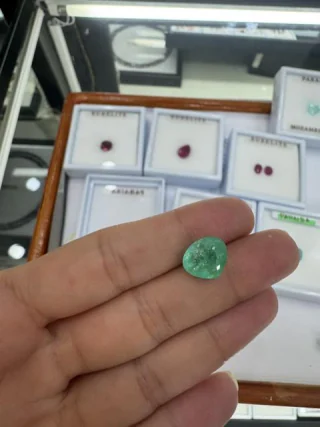
Where clarity sits
Expectations of clarity differ by species, and applying one standard to all of them leads buyers badly astray. Inclusions that would be unacceptable in one stone are entirely normal in another, emerald being the clearest example.
The question worth asking is not whether a stone has inclusions but whether they threaten its durability or interrupt the way it returns light.
Questions
- What makes one coloured stone more expensive than another?
- Saturation, tone and hue decide most of the price, followed by clarity and cut. Weight matters far less than buyers expect: a smaller stone with clean, saturated colour usually costs more than a larger stone that reads grey or brown.
- Why does a gemstone look different in the shop and at home?
- Because colour depends on the light it is seen in. Shop lighting is chosen to flatter. Reading a stone outdoors in daylight, before deciding, is the only reliable test.
- Are inclusions a problem in a coloured stone?
- Not necessarily. Expectations differ by species and inclusions that are normal in an emerald would be unusual in a sapphire. What matters is whether an inclusion threatens durability or interrupts the light the stone returns.