The Source
Before a stone is bought it is held, turned and questioned at origin. These frames are from that journey.
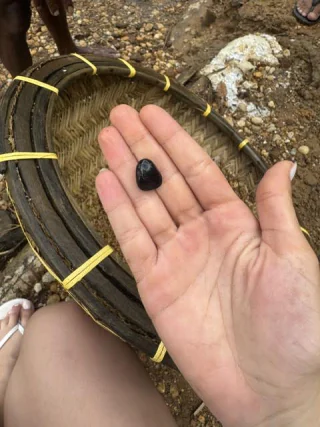
The field
A stone begins as something you would step over. Washed gravel, a sieve, water, and a person who has spent a lifetime learning which dull surface is worth carrying home.
Nothing at this stage looks like jewellery. Everything at this stage decides what the jewellery can be.
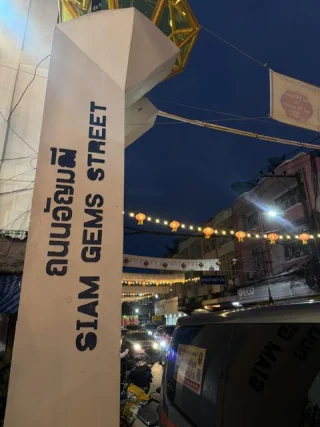
The street
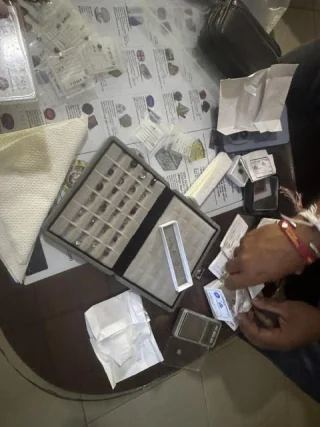
The trade happens on a few crowded streets, after dark as often as not, in rooms with a single lamp and a folded paper parcel between two people.
There is no catalogue here. There is a light, a loupe and an argument about colour.
The bench
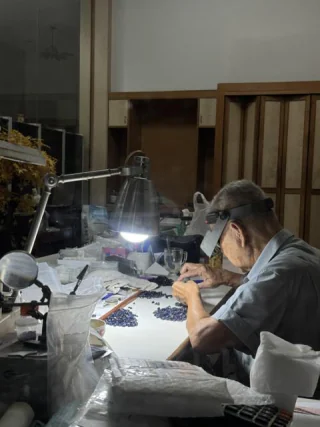
The cutter decides how much of the rough survives. Every angle he chooses is a trade between weight and light, and once it is taken it cannot be taken back.
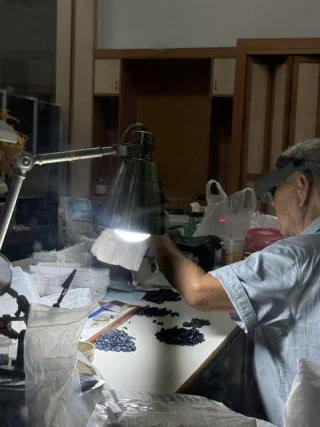
He works a field of small sapphires by hand, under one lamp, sorting by eye at a speed no instrument matches.
The laboratory
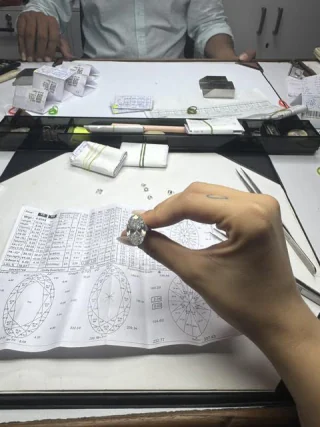
Enthusiasm is not evidence. Stones go to the national gem laboratory and come back with a report that says what they are, and sometimes says something the seller did not.
The grading sheet is the least romantic document in this trade and the most useful one.


The stone
What comes home is a small number of stones that survived every stage of that argument.
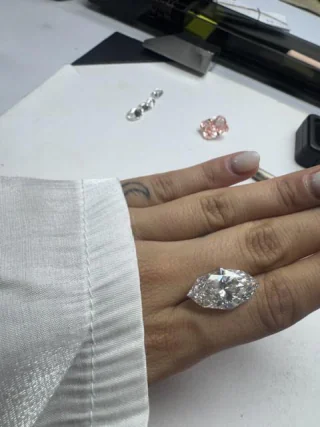
They are held against skin before anything is designed around them, because a stone that fails in daylight on a hand has failed, whatever the paperwork says.
What came home
Loose stones from this journey, waiting for the piece they will become.
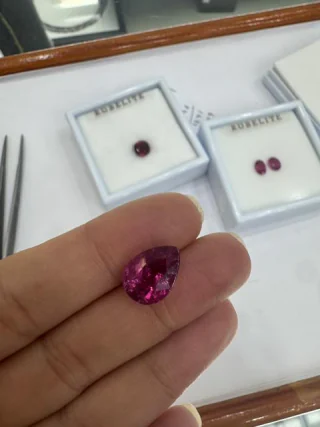
Rubellite, pear cut
Chosen for saturation held all the way through the point.
- Weight
- On request
- Report
- On request
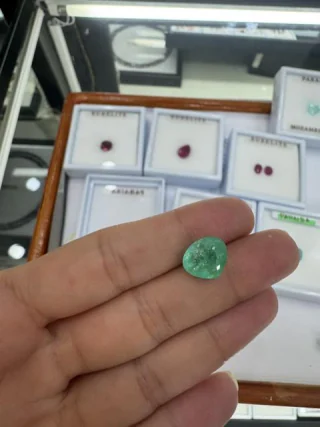
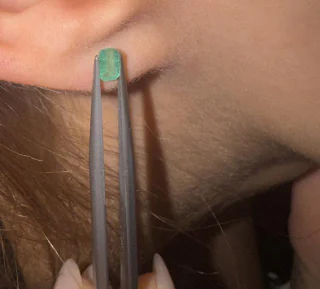
Emerald
Tried against skin before anything was designed around it.
- Weight
- On request
- Report
- On request
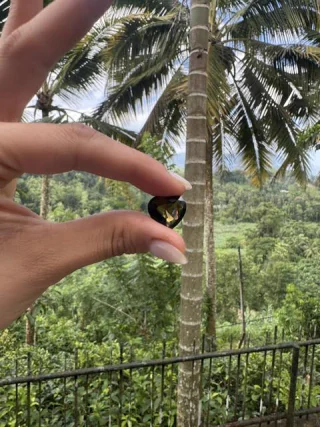
Heart cut stone
Read in daylight against the hills it came from.
- Weight
- On request
- Report
- On request
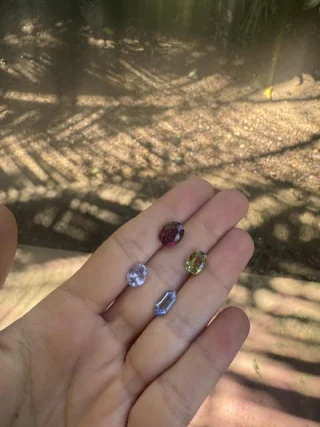
The travelling parcel
Five stones carried home together, still waiting for their settings.
- Weight
- On request
- Report
- On request