Reading a gem report
What a laboratory document actually tells you, and the one thing buyers always expect it to say that it never does.
What it states
A report identifies the stone. It names the species, says whether it formed in the ground or in a laboratory, records the weight and the measurements, and describes the cut.
For coloured stones the most valuable line is usually the one about treatment. Heat, filling and diffusion are ordinary in the trade and each changes what a stone is worth, so a report that addresses treatment is doing the work you are paying it for.
What it never states
A report does not tell you what a stone is worth. Laboratories identify and describe; they do not price, and any document that appears to do both should be read with suspicion.
It also does not tell you whether the stone is beautiful. Two stones with almost identical paperwork can behave very differently in daylight on a hand, which is the only test that has ever mattered to the person wearing it.
Which document you are being shown
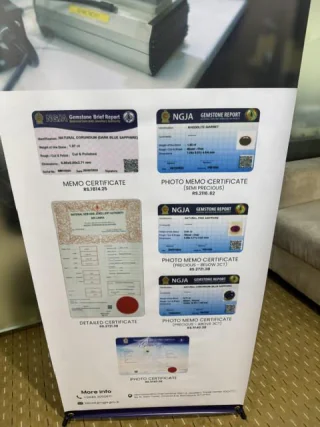
Laboratories issue several tiers of document, from a brief memo up to a full detailed report, and they are not interchangeable. A short memo confirms an identification. A detailed report carries the full description and is the one to ask for on a significant stone.
The practical rule is simple. Ask which laboratory issued it, which tier of document it is, and whether it addresses treatment. A seller who answers all three without hesitation is a seller worth continuing with.
Questions
- Does a gem report say how much a stone is worth?
- No. Laboratories identify and describe stones. They record species, origin of formation, weight, measurements, cut and treatment. Valuation is a separate exercise carried out by a valuer, not by a gem laboratory.
- Is a treated gemstone worth less?
- Usually yes, and the extent depends on the treatment. Heat is common and widely accepted in sapphire and ruby. Fracture filling and diffusion affect value far more. What matters is that the treatment is disclosed, which is why a report that addresses it is worth requesting.
- What is the difference between a memo and a full report?
- A memo confirms an identification in short form. A full report carries the complete description of the stone. On a significant purchase, ask for the full report rather than the memo.